Everyone is so mad. All. The goddamned. Time. About everything. And I legitimately fail to understand why. It sucks being mad. It doesn’t feel good. It’s like an itch you can’t scratch without maiming or killing someone because laws exist. So why, then, does it seem like folks these days—specifically in the U.S.—LOVE being mad? Why is MAD a state in which they strive to exist?

I recently made a lateral move to a new law firm, where I serve as general counsel for community associations (homeowners’ associations, condominium associations, mobile home parks, co-ops, etc.), and nowhere is unnecessary anger more prevalent than in a community association. These people HATE living where they live. They hate their neighbors; they hate the board of directors; they hate their property manager, and they hate their lawyers. I have to imagine it must be EXHAUSTING to be so mad all the fucking time.
In fact, this new job actually provides a good cross-section of (1) people and (2) the things they’re mad about; which serves as a pretty accurate sample for what I’m seeing in the comment sections of news articles.
What I have learned in the short time I’ve been working in this new position is that people like being angry. It makes them feel important. It makes them feel like they’re fighting for something—be it for themselves or for something they perceive as being bigger than them. And that’s the thing, right?
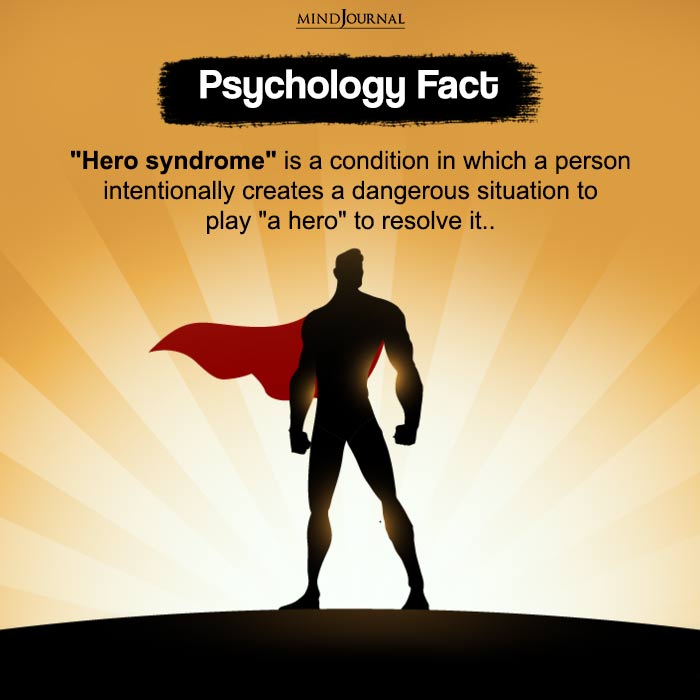
For SOME reason, humanity has collectively developed this hero complex, where they feel the need to be something, or be part of something bigger than them in order to “fix” it, and it’s usually because they perceive themselves as inherently good.
Now…this…this urge to be part of something bigger than you is not necessarily a bad thing all the time. There are some pretty tremendous organizations out there making big differences in other peoples’ lives. It’s the hyper-focused, ill-substantiated desire to be some sort of warrior, fighting for a cause that only makes sense to you. It’s the Mom’s of Liberty, or whatever the fuck, “fighting for the kids.” Fighting for what, exactly, Karen? What don’t your kids have that you think they are entitled to? I doubt it’s to be safe from Drag Queens, because how often do these cunts go to drag queen brunch? So, the answer is usually, at its core, nothing. Drag Queens aren’t out here “stealin’ yo keeds” or “grooming” them, whatever the fuck that means. Another tangent: what “grooming” do these crazy fucks think Drag Queens and gays are doing? I’m not a betting kinda guy, but I’d be willing to drop a few hunnids on the fact that most of these people don’t know what the word “grooming” actually means. Same as “woke,” the subject of its own blog post.

It’s not just Mom’s of Liberty (or whatever), its the Proud Boys; it’s the MAGAricans; it’s the HOA presidents and neighborhood vigilantes. I’m almost hesitant to call this a desire to be part of something bigger than you, because I don’t think it’s a desire born of altruism. I think it’s more of a desire to…well, be a hero. To be the hero of not only your own story, but of others; and that desire I think is born of narcissism. I can’t say whether this is a new thing begotten from the relatively recent explosion of information (i.e., the internet) and access to said information, or if it has always been one of many unsavory aspects of our species. I’m more inclined to believe the latter—that this desire has always been there—given our species’ history of wars over stupid shit. Like, wars over imaginary men who live in the sky and judge you; or wars over ground bark and leaves; or wars over oil; or wars because one rich white guy wants some other rich white guy’s land because he WANTS it, okay??
I feel people have been manufacturing reasons to fight since we were evolved enough to cook our food. In this day and age, it’s just gotten absurd. Right? Because there’s not really much most people need. You don’t have to fight for food or shelter or to live. You don’t have to protect your family from roving bandits or wild animals. You don’t have a king to fight for anymore…though even if you did, that would also be a stupid reason to voluntarily fight someone (notice I said “voluntary” because I understand monarchs and governments send men against their will to fight for stupid shit [another subject for another blog post]).

Because there is not really a need to fight anyone anymore, maybe peoples’ collective genetic memory is urging them to find something to fight about because without something to fight about, who even are you? What purpose do you have if not to fight for something?
I mean.
To drink mimosas, for one.
The idea that to have purpose in life means to have something to “fight for,” is absurd. And how many times have you heard that trope in movies and songs? “Something worth fighting for.” Why? Why is it fighting and not, i don’t know, learning? Or giving? Or helping? Or nuturing? Why is it fighting?
Now, I guess we get into the patriarchy and toxic masculinity, because I have a sneaking suspicion the vast majority of women don’t feel the innate urge to fight in order to be fulfilled. I would posture the same theory for the vast majority of men, but if that were the case, we wouldn’t be in a situation where fighting is in fact and in itself a worthy goal. Right? Like we got here somehow, and I can’t reasonably believe woman contributed much to it.
But I digress.
The fact is people nowadays feel the need to fight for something because without it, they don’t feel they have purpose. I say this, obviously, as a mere observer. I haven’t conducted any studies, nor employed the scientific method other than just observing people around me and on social media. I think this urge can be seen in its most unadulterated form in HOAs. Why? Because there is no disputing that there is a distinct lack of any matters of actual importance within an HOA. And yet, people who live in an HOA are the most Joan-of-Arc, knight-in-shining-armor, vigilante, sword and shield-wielding sons-of-bitches I’ve ever had the displeasure of serving. Like okay, Richard. Literally not a single person on this planet—aside from you—cares if Bob-from-down-the-street keeps his trash can in sight a day after trash day, calm down.

They get SO mad about this shit and take it SO fucking seriously. Like, I recently attended what was supposed to be a reconciliation meeting between a master HOA and one of its sub-HOAs, and the president of the master HOA literally said that our client was starting a “CIVIL WAR,” and this motherfucker was dead-ass serious. No, Richard. We’re just asking you to use proper math when calculating folks’ annual assessments. No need for the cannons, Jesus.
This desire has definitely been distilled to its purest form in HOAs, and people are unabashed about it. So practicing this type of law most definitely helped me identify when folks were acting on this desire out in the wild (e.g., the comment sections of news articles). Most of the comments are ill-informed and emotion-driven. The emotion is by and large the same emotion shared by the Knights of the Round Cul-De-Sac, who embark on Holy Grail missions when someone forgets to pick up after their dog.
There is also a staggering amount of whataboutism—on BOTH sides of the aisle. There’s actually a psychological term for this: “switchtracking.” The Hidden Brain podcast (which I highly recommend) gave a great example of switchtracking:
A couple has been married for 7 years. The wife has told the husband on numerous occasions she does not like red roses. Despite this, the husband buys the wife 2 dozen red roses for some special occasion. The wife responds to this gift, not by thanking the husband, but by reminding him she does not like red roses. The husband is frustrated and responds to his wife’s statement by chastising her for not saying “thank you.”
Rather than respond directly to his wife’s statement—that she does not like red roses—the husband switchtracks and instead demands gratitude for the unwanted gift. He has not listened to her concern regarding the gift, and instead acts on his frustration and changes the subject, now directing the conversation to gratitude instead of listening and retaining information. This was switchtracking, and to be honest, was a very subtle example of switchtracking. I didn’t think the husband’s reaction was out of line until it was explained. And to be clear, being frustrated is a little understandable, because red roses are hella expensive and he likely meant well with his gift (that said, if the reason you buy gifts for people is for a “thank you” or other recognition of your financial sacrifice, YOU’RE DOING IT WRONG. Try again).
But what this gift told his wife is either (1) he doesn’t listen to her, (2) he does listen but doesn’t care, or (3) he doesn’t remember the things she tells him. In fact in the example, the two reconcile and the husband jokes, “So I guess I have to both listen and remember what you tell me”).
I see a lot of switchtracking in the comments and on social media posts. Indeed, I see the MOST random switchtracking. For example, there was an influencer who intentionally crashed his plane in a national park. This incident had NOTHING to do with politics and EVERYTHING to do with an intentional tort and possibly a crime. Yet, there was more than one comment blaming the incident on President Biden.
I’m sorry, what?
Another example was when it came out that cocaine was found in the White House, and there was speculation it was Hunter Biden’s. Regardless of the veracity of those claims, the response from liberals was not directly countering these allegations…it was to attack several conservative lawmakers and/or their relatives for doing other stupid shit. The appropriate response (if there is an appropriate response to unsubstantiated claims) was to have requested the evidence supporting these claims.
Below are other examples I’ve come across:
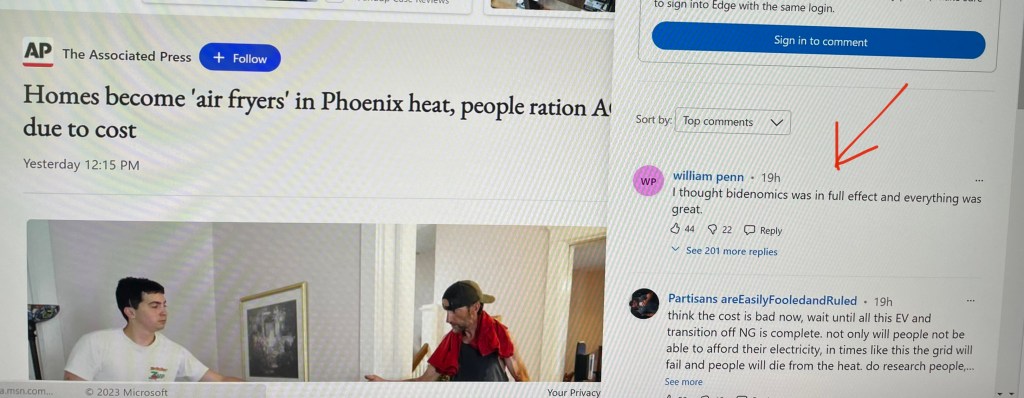

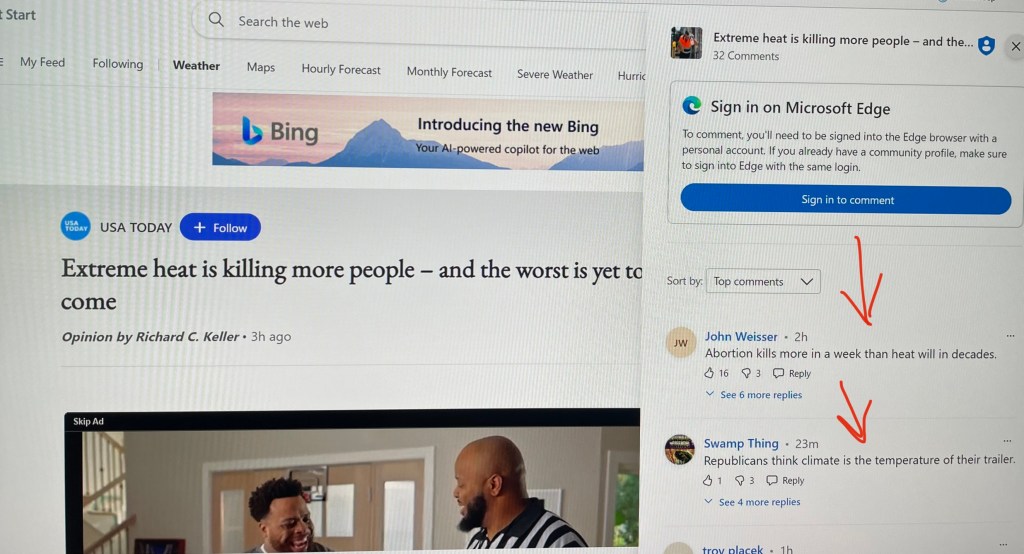
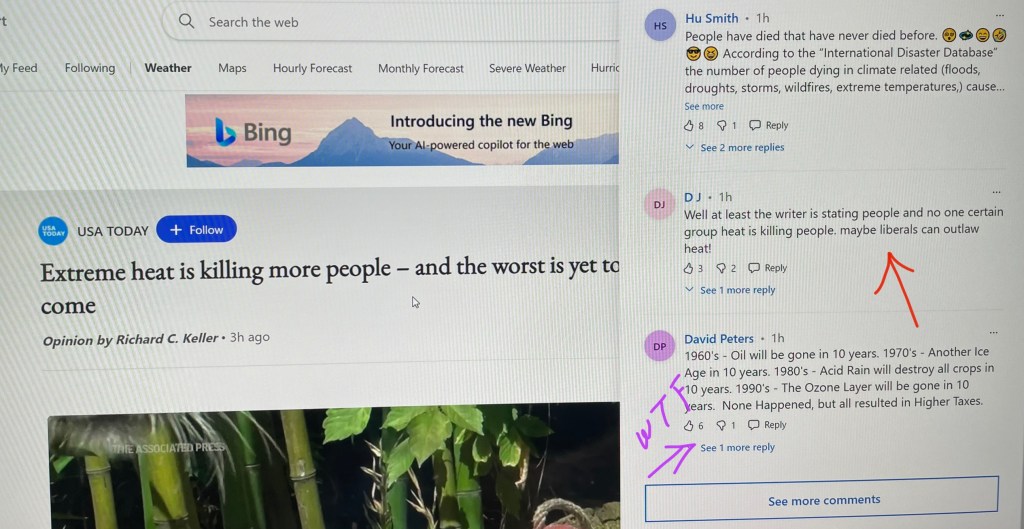
Another very important concept I’ve picked up over my years of practice is framing. Framing is critical to succeeding on your argument. If you are dragged into opposing counsel’s frame, you’re toast. You need to protect and defend the frame you’ve placed your case in to the death. Otherwise, you’re falling into the other guy’s trap.
For example, Jellioso used to practice first party property insurance defense. That’s just a really long-winded way of saying she represented the insurance companies against their insureds when the insureds disputed the insurance companies’ coverage decisions. There are three broad categories of defenses in that area of practice:
1. The thing that caused the damage is not a covered cause of loss under the policy;
2. The amount of money the insured is asking for is too much in relation to the repairs that need to be done; and
3. The insurer got rid of all the evidence of the damage so the insurance company was not able to figure out what happened.
It’s the third defense Jellioso saw a lot of: when homeowners would hire water mitigation companies and contractors to fix everything before the insurance company had a chance to inspect. In order to figure out whether there is coverage, the insurance company has to know how the damage happened.
Obviously, whether an insurance company is able to complete its investigation is a very different issue than whether a cause of loss is covered under the policy. Despite this, counsel would try to throw these arguments which were completely irrelevant to a judge in an effort to confuse the issues and get motions denied.
For example, Jellioso was defending a case where this guy claimed his whole-ass cast iron plumbing system was in the shit and causing all this damage such that the whole thing needed to be replaced. He was claiming over $250,000. Problem was, he threw out all the shit that he’d claimed was water damaged before the insurance company had a chance to inspect. Without evidence of damage, there’s nothing the insurance company can do. Right? Because their entire purpose is to pay their insureds money to cover the cost of damage to their house.
So the claim was denied on prejudice (that third defense listed above) and Jelli drafted a summary judgment motion arguing that because this dude threw out the evidence, the insurance company wasn’t able to tell (1) what was damaged; (2) how it happened, or (3) whether the damage should be covered. The attorney representing the insured is famous in this state for prosecuting cast iron claims and has been a successful lawyer for a very long time. Despite this, instead of arguing tit-for-tat, he focused on the condition of the cast iron system and how it was at the end of its serviceable life. He didn’t say anything about actual damages, or whether the insurance company did its due diligence in investigating.
This guy switchtracked. It was likely intentional, in an effort to confuse the issues and unfortunately, it worked. The court denied the motion (courts tend to err on the side of denying motions for summary judgment because they don’t like being reversed on appeal). Both Jellioso and I have…feelings…about this attorney’s firm and those who work with his firm which will not be shared here.
It is infuriating when I see people switchtracking because it is either born of cowardice or ignorance. Either you’re too scared to argue the actual issue at hand because you know you have a shit argument and you’re trying to deflect, or you’re just bad at arguing.
Listen: everyone on this planet has switchtracked. I have and many of my colleagues have, whether intentional or not. So I get it. Switchtracking is exclusively employed to take advantage of low-hanging fruits. It’s an easy “out.” And I put quotations around “out” because if you’re arguing against someone in the know, they’re not gonna let you out of that argument. But most people take the bait (which is another, related wide-spread problem) and eventually move away from the initial point of whatever argument they were trying to make.
So these hero complexes coupled with switchtracking make for very slippery “arguments”-you can’t nail someone down on a point because they keep deflecting, and they keep deflecting because they feel very strongly (often unjustifiably so) about the subject. Arguments fueled by emotion and/or misinformation, and perpetuated by constantly changing the subject are abound these days, which in turn makes it even more difficult and tedious to sift through the bullshit (see my recent post about doing your research before posting).
What’s the takeaway?
1. Do your research
2. Frame your argument
3. Stay on track with your argument and follow through
There: now you know how to be a lawyer. Congratulations.

 Just Jelli